Xiaomi 17 Ultra: The Global Wait is Almost Over (But Is It Worth the Price?)
Let’s be honest—if you are reading this, you probably watched the China launch on Christmas Day (December 25, 2025) and…
Let’s be honest—if you are reading this, you probably watched the China launch on Christmas Day (December 25, 2025) and felt a mix of excitement and jealousy. While our friends in China have been unboxing Xiaomi’s latest photography monster for nearly two months, the rest of the world has been stuck playing the waiting game.
But now that we are in February 2026, the global launch is just around the corner (likely at MWC Barcelona). Having looked at what the Chinese version offers, we can now paint a pretty clear picture of what we are getting—and more importantly, how much damage it’s going to do to our wallets.
Here is everything you need to know about the Xiaomi 17 Ultra’s global specs, features, and expected pricing, written without the marketing Hype.
Design: It’s a Camera with a Phone Attached
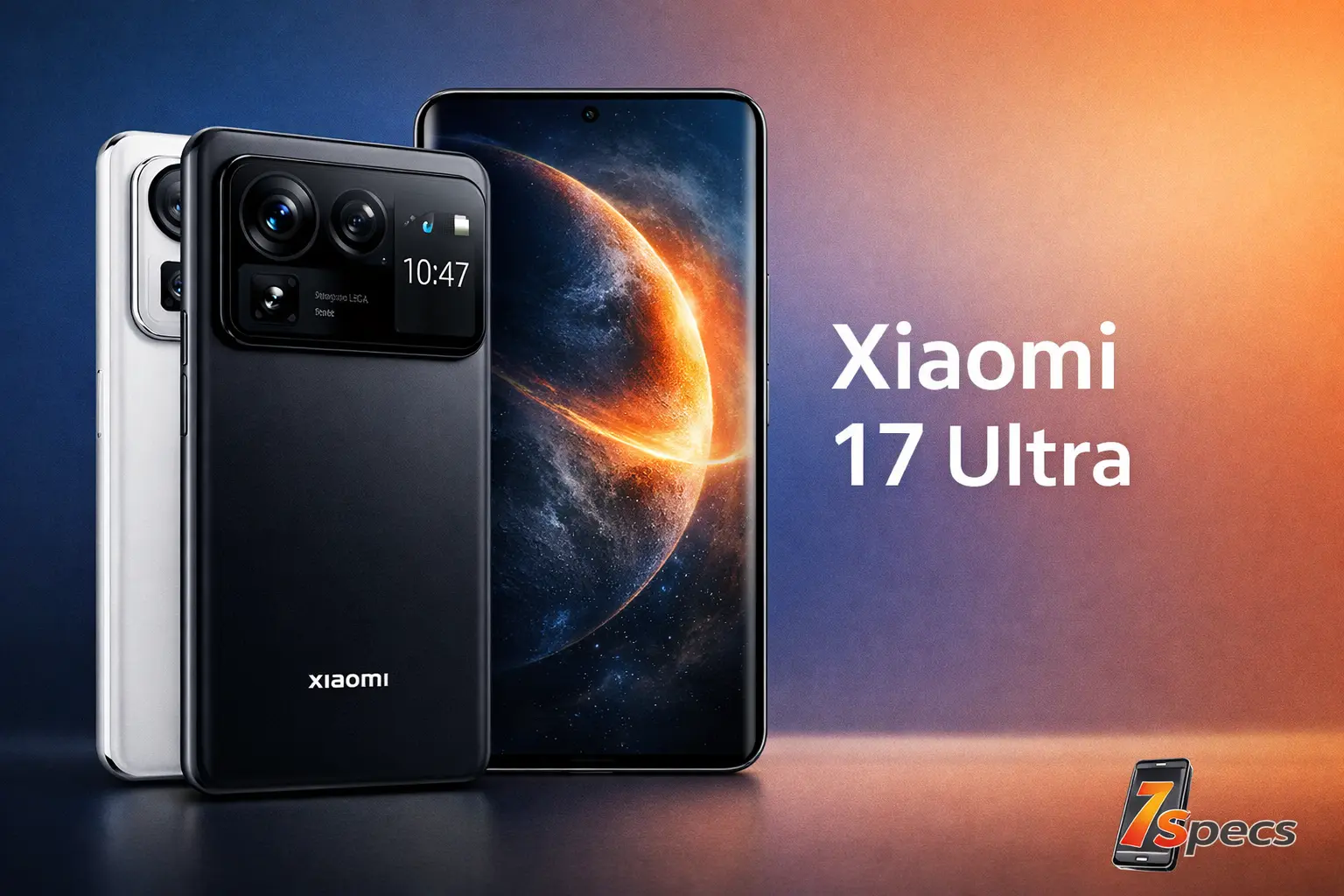
Let’s address the elephant in the room: the design. Xiaomi isn’t trying to hide the fact that this is a camera first and a smartphone second. The circular camera module on the back isn’t just a bump; it’s a plateau.
Based on the China units, the “Vegan Leather” back is standard again. Honestly, I prefer this over glass for a phone this heavy because it adds grip. And you will need grip. The phone is top-heavy thanks to those massive lenses.
- The Weight: It tips the scales around 230 grams. It’s a brick, but a premium-feeling brick.
- The Look: The “ceramic-feel” glass options are available in China, but globally, we usually get the Black and White leather versions. It looks professional, almost like a compact Leica camera.
- Durability: It keeps the IP69 rating (a step up from IP68), meaning it can withstand high-pressure water jets. So, if you drop it in the pool, it’s fine.
Display: Quad-Curved is the New Flat
Xiaomi has moved to what they call a “All-Around Liquid Display.” In simple terms, the glass curves very slightly on all four sides and corners. It feels like a smooth pebble when you swipe, but it doesn’t have those annoying “waterfall” edges that mess up your typing.
- The Panel: It’s a 6.73-inch 2K LTPO AMOLED.
- Brightness: The peak brightness hits a crazy 4000 nits. In the real world, this means you can read Google Maps on a sunny beach without squinting.
- Refresh Rate: It’s 1-120Hz variable. Nothing new here, but it’s buttery smooth.
The Cameras: Why You Are Actually Here
Okay, this is the main event. If you don’t care about cameras, stop reading and go buy a OnePlus 15R. The Xiaomi 17 Ultra is strictly for people who want DSLR quality in their pocket.
1. The Main Sensor (The King) It uses the newest 1-inch Sony LYT-900 (Revised) sensor. Xiaomi has tweaked the aperture mechanism. It now has a stepless variable aperture from f/1.6 to f/4.0.
- Human take: This means you can get that creamy background blur (bokeh) naturally without AI fake-blur, or you can stop it down to keep everything in focus for landscapes.
2. The Dual Telephotos (The Secret Sauce) This is where Xiaomi beats Samsung and Apple. You get two zoom lenses:
- 3.2x Portrait Lens: This is the money lens. It’s perfect for portraits of people or pets. The background compression is beautiful.
- 5x Periscope Lens: This is for the far-away stuff. But the cool part is the “Telemacro” ability. You can get super close to a flower or a watch face with the zoom lens, and the detail is insane.
3. The Ultra-Wide It’s a 50MP shooter. It’s great, it’s wide, it does the job. Not much has changed here, but it matches the colors of the main lens perfectly, which is what matters.
The Leica Difference: The “Leica Authentic” mode is still the best filter system in the smartphone world. It makes photos look moody, contrasty, and “real” rather than the over-brightened, neon-looking photos you get from other brands.
Performance: Overkill, Naturally
Since it launched in late 2025, it runs on the Snapdragon 8 Gen 5. Look, in 2026, talking about benchmark scores is boring. The phone flies. You can edit 4K video, play Genshin Impact at max settings, or have 50 chrome tabs open. It won’t stutter.
However, the cooling is what I’m watching closely. The “Photography Kit” grip (sold separately) actually has a battery inside it now to help run the camera for longer without heating up the main chassis too much.
Battery & Charging: Finally, Silicon Carbon
The China version shipped with a 6,000mAh battery. This is a massive jump from the 5000mAh we saw in the 14 Ultra.
- Why it matters: Silicon-Carbon tech allows more battery capacity in the same physical size. So, the phone isn’t thicker, but it lasts about 20% longer.
- Charging: It supports 90W Wired and 80W Wireless.
- Real talk: The 80W wireless is insane, but you have to buy Xiaomi’s specific charger stand to get those speeds. Standard Qi chargers will be slow.
Software: The HyperOS Question
It launches with HyperOS 2.0 based on Android 16.
- The Good: It’s smoother than MIUI ever was. Animations are fluid, and connectivity with Xiaomi tablets/laptops is seamless.
- The Bad (Global Fear): The Chinese version is usually bloat-free. But historically, when Xiaomi brings phones global, they sometimes preload apps we don’t want. Let’s hope they keep the “Ultra” experience clean this time.
Global Pricing: Brace for Impact
This is the part that hurts.
In China, the Xiaomi 17 Ultra launched at a starting price of roughly CNY 6,499 (approx $900). But do not expect that price globally. We have to account for import taxes, logistics, and the “Global Tax.”
Here is my realistic price prediction for the Global Launch (Feb/March 2026):
- Europe: €1,499 (approx.)
- UK: £1,299 (approx.)
- India: ₹1,24,999 (approx.)
- USA: (Likely not officially launching, as usual).
Is it expensive? Yes. It’s basically the same price as a Galaxy S26 Ultra or iPhone 17 Pro Max.
Full Specifications Summary (Global Expectations)
| Feature | Details |
| Display | 6.73-inch 2K LTPO AMOLED (Micro-Curved) |
| Refresh Rate | 1Hz – 120Hz Adaptive (LTPO 2.0) |
| Brightness | 4000 nits (Peak), 1000 nits (Typical) |
| Processor | Snapdragon 8 Gen 5 (4nm) |
| RAM | 12GB / 16GB (LPDDR6X) |
| Storage | 256GB / 512GB / 1TB (UFS 4.1) |
| Main Camera | 50MP Sony LYT-900 (1-inch Type) Stepless Variable Aperture (f/1.6 – f/4.0) |
| Telephoto 1 | 50MP Sony IMX858 (3.2x Optical Zoom) |
| Telephoto 2 | 50MP Sony IMX858 (5x Periscope Zoom) |
| Ultra-Wide | 50MP (122° FOV) with Macro Support |
| Front Camera | 32MP (4K Video Support) |
| Battery | 6,000mAh (Silicon-Carbon Technology) |
| Wired Charging | 90W HyperCharge (0-100% in ~34 mins) |
| Wireless Charging | 80W (Requires Xiaomi Stand) |
| Build Material | Vegan Leather Back + High-Strength Aluminum Frame |
| Durability | IP69 (Water & High-Pressure Jet Proof) |
| Software | HyperOS 2.0 based on Android 16 |
| Connectivity | 5G, Wi-Fi 7, Bluetooth 5.4, NFC, USB 3.2 Gen 2 |
| Security | Ultrasonic Fingerprint Sensor (Under Display) |
| Weight | Approx. 229 grams |
Final Verdict: Should You Buy It?
If you are sitting there with a Xiaomi 14 Ultra or 15 Ultra, the upgrade might feel small unless you really need that bigger battery.
But if you are coming from an older phone, or you are tired of Samsung’s slow shutter speed and Apple’s “safe” processing, the Xiaomi 17 Ultra is looking like the most exciting phone of 2026.
It’s expensive, it’s heavy, and the camera bump is ridiculous. But the first time you snap a portrait at 3.2x in a dimly lit bar and see the result, you’ll realize exactly where your money went.
Stay tuned for the official global announcement in a few weeks!
Check Also :
- iQOO Z10 Lite 5G: Sensible Budget Phone or Too Many Compromises?
- Realme P3 5G: Smart Performance Promise or Another Budget Compromise?
- OnePlus 15R vs Google Pixel 9a: Performance or Camera Intelligence— Which Should You Buy?
- The Budget Beast That Surprised Me: Redmi 15C 5G Deep Dive Review
- OnePlus 9R vs Google Pixel 6a: Performance Power or Camera Intelligence?
- iQOO Z10x 5G: Reliable Budget Performer or Another Average 5G Phone?